
What is polystyrene, and is polystyrene recyclable?
Polystyrene is a plastic polymer. It carries resin identification code 6, the number printed inside the recycling triangle on many plastic items.
It appears in business waste in two main forms:
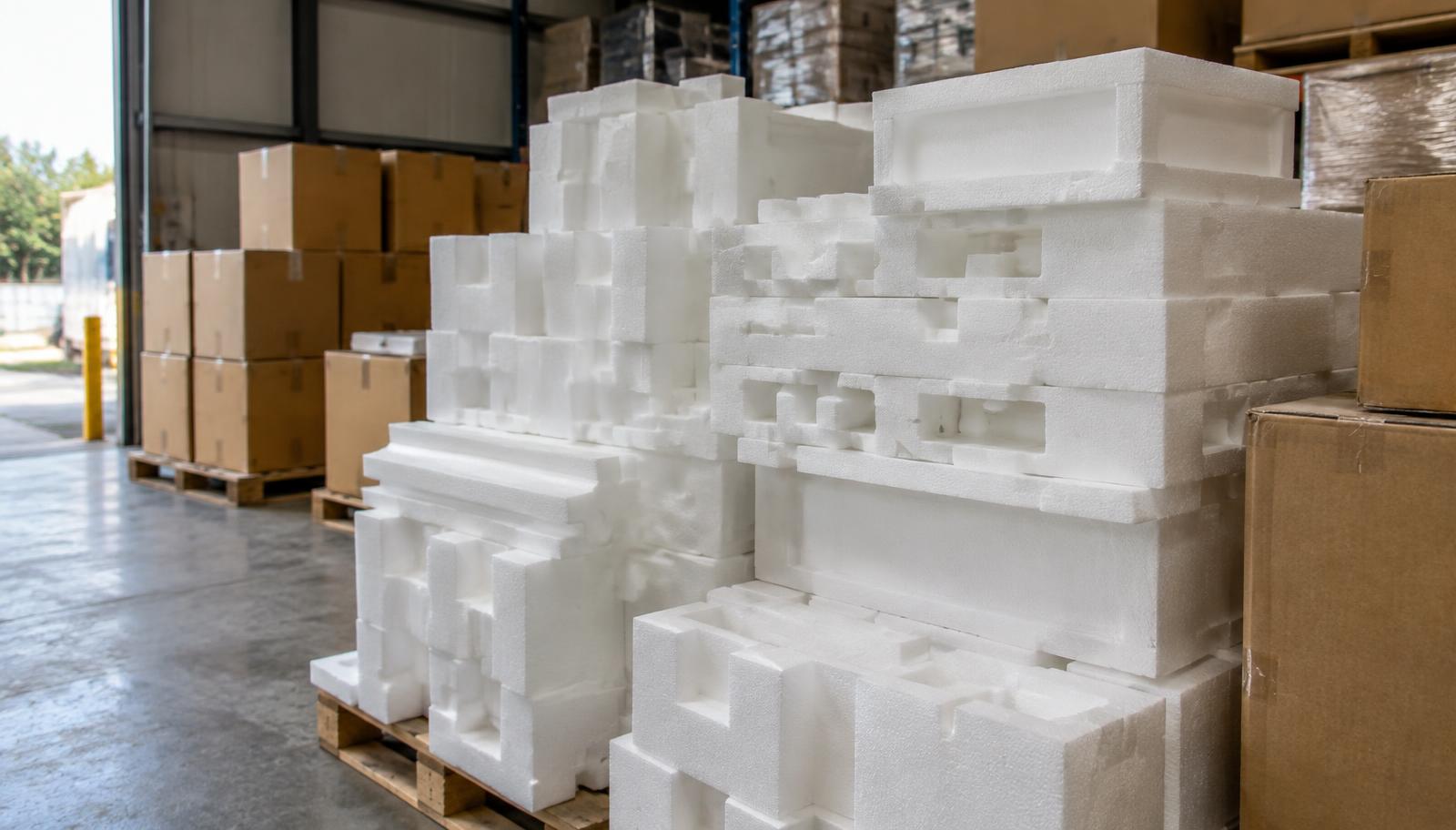
- Expanded polystyrene (EPS): the light white foam used as protective packaging around electrical goods, furniture and fragile items, and in some insulation boards.
- Solid (rigid) polystyrene: a harder, often clear or coloured plastic used for items such as disposable cutlery, cups, trays and some product casings.
EPS is mostly air, which is why it is bulky in relation to its weight. This affects how it is stored and transported once it becomes waste.
Can you recycle polystyrene in a workplace recycling bin?
The GOV.UK workplace recycling guidance lists polystyrene among the plastics that are not part of the plastic recycling stream for workplaces, alongside compostable plastic, PVC and bulky rigid plastics. The guidance says to check with your collector about items not on the list.
So the answer to "can you recycle polystyrene" depends on the collector. Polystyrene does not belong in the standard workplace plastic recycling bin, but it may be accepted through a separate collection where a reprocessor takes it.
How polystyrene packaging is classified as waste
Every business must classify the waste it produces before it is collected, disposed of or recovered. The waste classification code, also called the List of Waste (LoW) or European Waste Catalogue (EWC) code, goes on the paperwork.
The GOV.UK guidance on classifying packaging waste lists 15 01 02 for clean plastic packaging and 15 01 10* for packaging with hazardous residues. The asterisk means the waste is hazardous. The guidance also states that containers must be empty to be classified as packaging waste.
Classification is the waste producer's legal duty. The right code depends on what the waste is and whether anything has contaminated it, so speak to our team if you are unsure how your polystyrene waste is described.
Packaging rules that involve polystyrene
Two sets of rules apply to businesses that supply or import plastic packaging, which can include polystyrene.
Extended producer responsibility (EPR) for packaging
Under EPR for packaging, a UK business is an obligated producer if it carries out a listed packaging activity, supplied or imported more than 25 tonnes of packaging in the previous year, and has an annual turnover of £1 million or more. Charities are exempt, but their trading subsidiaries are not.
Plastic Packaging Tax
Plastic Packaging Tax came into force on 1 April 2022. According to HMRC guidance, packaging with less than 30% recycled plastic content is taxable, and a business must register if it makes or imports 10 tonnes or more of finished plastic packaging components within the thresholds set out in the guidance.
Your duty of care when polystyrene leaves your site
The waste duty of care applies to all business waste in England, including polystyrene. GOV.UK states that a business must complete a waste transfer note for each load of waste that leaves its premises and keep a copy for 2 years. The business taking the waste must be authorised, for example a registered waste carrier.
Polystyrene is also kept separate from paper and card. GOV.UK workplace recycling guidance requires paper and card to be collected separately from plastic, metal and glass unless the collector has completed a written co-collection assessment. For businesses that also produce large volumes of cardboard packaging, our cardboard recycling service covers baled and palletised card.
What we need to know about your plastic waste
We collect a range of plastics from businesses across the UK through our plastic recycling service, including rigid plastics, film and baled material. Acceptance of polystyrene depends on its type, condition and volume, so our team needs a description before a collection can be quoted or arranged:
- the type of polystyrene (expanded foam or solid plastic) and what it was used for
- approximate volume or weight
- whether it is clean or has contact with food, oils, chemicals or other residues
- whether other plastics or packaging are in the same load
- the collection location and access details
Rules in Scotland, Wales and Northern Ireland
This article describes the position in England. Different rules apply elsewhere in the UK. Contact the Scottish Environment Protection Agency (SEPA), Natural Resources Wales or the Northern Ireland Environment Agency for the rules that apply there.
Frequently asked questions
Is polystyrene recyclable?
Polystyrene is a plastic and can be recycled where a collector or reprocessor accepts it. GOV.UK guidance lists it as outside the standard plastic recycling stream for workplaces in England.
Can polystyrene go in a workplace plastic recycling bin?
GOV.UK workplace recycling guidance lists polystyrene among the plastics not included in the workplace plastic recycling stream. The guidance says to check with your collector.
Is polystyrene hazardous waste?
Clean polystyrene packaging is listed under non-hazardous plastic packaging in GOV.UK guidance. Packaging with hazardous residues has a separate hazardous code, 15 01 10*.
Do I need a waste transfer note for polystyrene?
GOV.UK states that a waste transfer note is needed for each load of business waste that leaves your premises, and a copy must be kept for 2 years.
Sources
- GOV.UK: Workplace recycling in England
- GOV.UK: Packaging waste and recyclables, how to classify
- GOV.UK: Check if you must comply with EPR for packaging
- GOV.UK: Check if you need to register for Plastic Packaging Tax
- GOV.UK: Waste transfer notes
Speak to our team
To discuss your waste, contact our team on 0845 366 9306 or email recycle@collectandrecycle.com.
This article is for general information only and does not constitute professional or legal advice. Waste producers are legally responsible for correctly classifying their waste. For guidance on your specific waste, please contact our team.