
WEEE Recycling and Electronic Waste Disposal for Businesses
National Recycling provides WEEE recycling for businesses across the UK, collecting computers, fridges, printers, TVs, vapes and other electrical waste from your site.
Electronic waste collections
What Counts as WEEE Waste?
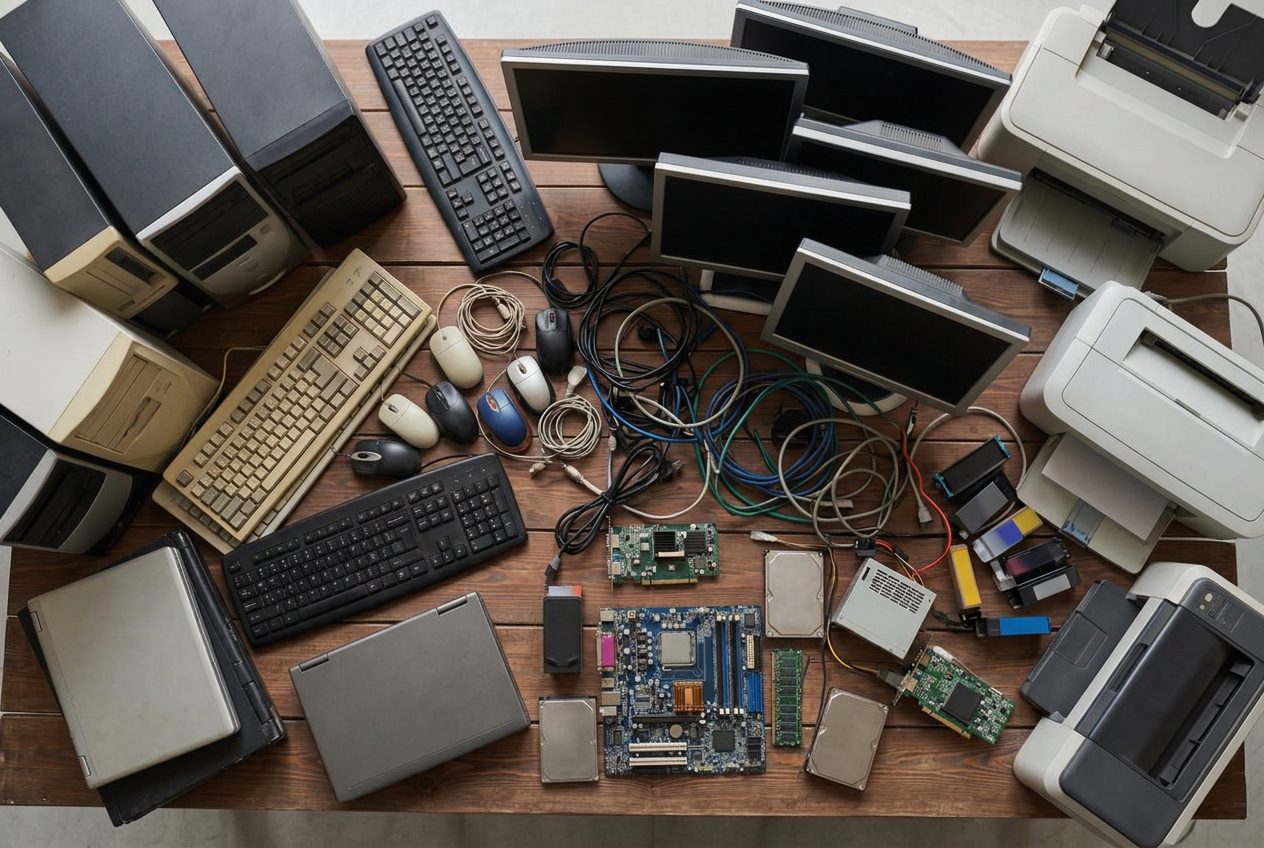
WEEE stands for waste electrical and electronic equipment. In simple terms, almost anything with a plug, a battery or a cable becomes WEEE waste once your business no longer needs it.
For most businesses that means old IT equipment, office printers, cooling appliances, lighting, and the small electrical items that build up in stores and stockrooms. We handle recycling for single items, full site clearances and regular collections. Typical loads include:
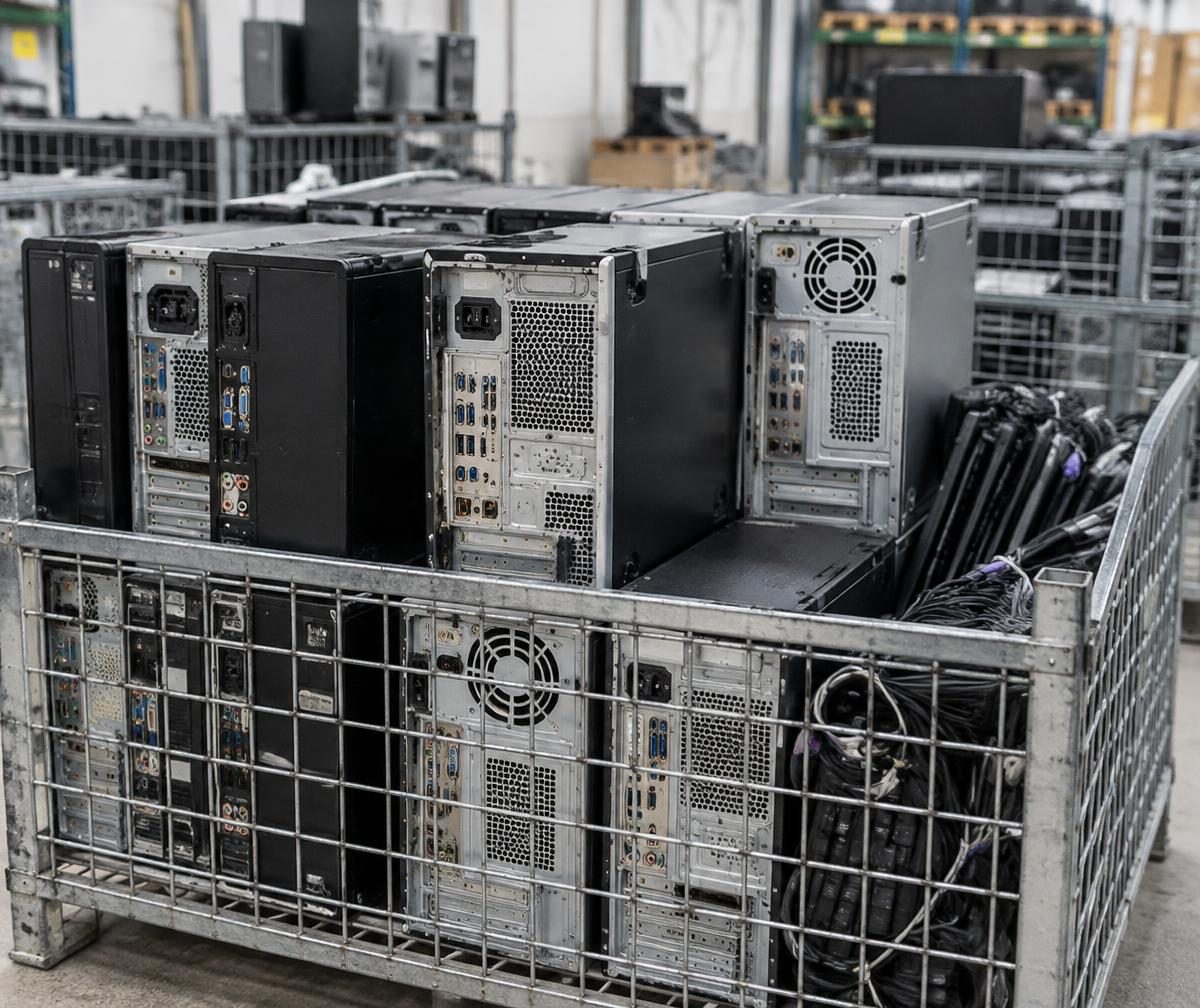
Handled with care.
Office and IT equipment.
Computers, laptops, printers and servers from offices, schools and data rooms.Cooling equipment.
Fridges, freezers and air conditioning units, which need their refrigerant gases recovered.Lighting waste.
Fluorescent tubes and lamps, which contain mercury.Small electrical items.
Vapes, phones, cables and batteries in large volumes.Industrial electronic equipment.
Specialised machinery and tools from factories and workshops.Specialist electronics.
Medical devices, TVs, printed circuit boards and solar inverters.
From your site to a fresh start
How Our WEEE Collection Works
- 01
Tell us what you have.
Use the quote form to give us the waste type, rough quantity and collection postcode. A photo helps us quote accurately. - 02
Get your quote.
Our team replies with a quote providing clear pricing details. - 03
We collect.
A verified waste carrier from our haulage network collects on a day that suits you. - 04
Recycling and disposal.
At a licensed recycling facility, hazardous parts such as batteries and mercury are removed first. The rest is shredded and sorted so metals and plastics can be recovered. - 05
Receive your documents.
You get waste transfer notes, plus hazardous waste consignment notes where the load needs them.
Let’s get it sorted
Book Your WEEE Collection
Tell us what electrical waste you need collected for WEEE recycling and our team will reply with a quote. Call 0845 366 9306 or request a quote online.
Why it matters
The Benefits Of Recycling Electrical Waste
Recycling electrical waste recovers copper, aluminium, gold and rare metals from equipment that would otherwise be destroyed, while refrigerants, batteries and CRT glass are treated safely. It cuts your disposal volumes and produces transfer documentation you can file straight into your WEEE records.
A partner you can depend on
Why Choose National Recycling for Electrical Waste Recycling
UK-wide WEEE collection.
Our network of haulage partners collects from businesses nationwide, supported by a head office in Northampton and a depot in Burscough.Fully compliant.
We use verified waste carriers and licensed recycling facilities, in line with UK regulations.Recycling first.
We recycle wherever it is possible and safe, and only dispose of what cannot be recovered.One supplier for every type of WEEE.
IT, cooling equipment, lighting and specialist electronics can all be handled through one point of contact.Fast quotes.
Our team replies quickly to every enquiry, providing a fast turnaround for collections.One-off or regular.
Book a single clearance or a scheduled collection, with one supplier for every location.
Find the right service
Our Electronic Recycling Services
Each type of electrical waste has its own risks and rules. Find out more about the equipment you need collected:
What counts as WEEE waste?
WEEE waste is any electrical or electronic equipment that has reached the end of its life. For businesses this usually means computers, printers, servers, fridges, freezers, air conditioning units, fluorescent tubes, TVs, vapes and phones. If it has a plug, a battery or a cable, it is almost certainly WEEE.
What are a business's obligations under the WEEE Regulations 2013?
Your business must make sure its electrical waste goes to a licensed recycling facility rather than general waste or landfill. Under your duty of care, you must use authorised carriers and keep waste transfer notes for 2 years. Hazardous items, such as fluorescent tubes, also need consignment notes, kept for 3 years in England and Wales.
Can I put electrical waste in a general waste bin or skip?
No. Business electrical waste must be collected separately and recycled or disposed of at a licensed recycling facility. Putting it in general waste breaks your duty of care, and items with lithium batteries, such as vapes and laptops, can start fires in bins and waste vehicles. Keep WEEE apart from other waste until it is collected.
How much does WEEE disposal cost?
The cost of WEEE disposal depends on the type of equipment, the quantity and where you are based. Hazardous items, such as fridges and fluorescent tubes, need extra handling. Send us the details and a photo through our quote form and our team will reply with a quote.
What paperwork do I get for a WEEE collection?
You receive waste transfer notes for every collection, and hazardous waste consignment notes where the load includes hazardous items. Keep these records, 2 years for transfer notes and 3 years for consignment notes in England and Wales, so you can show your electrical waste was handled legally.
Do you collect electrical waste from households?
No. We provide WEEE collection for businesses and other organisations, including schools, local authorities, retailers, labs and offices. For household electrical waste, contact your local council or recycling centre, or ask the retailer selling you a replacement appliance about its take-back service.