
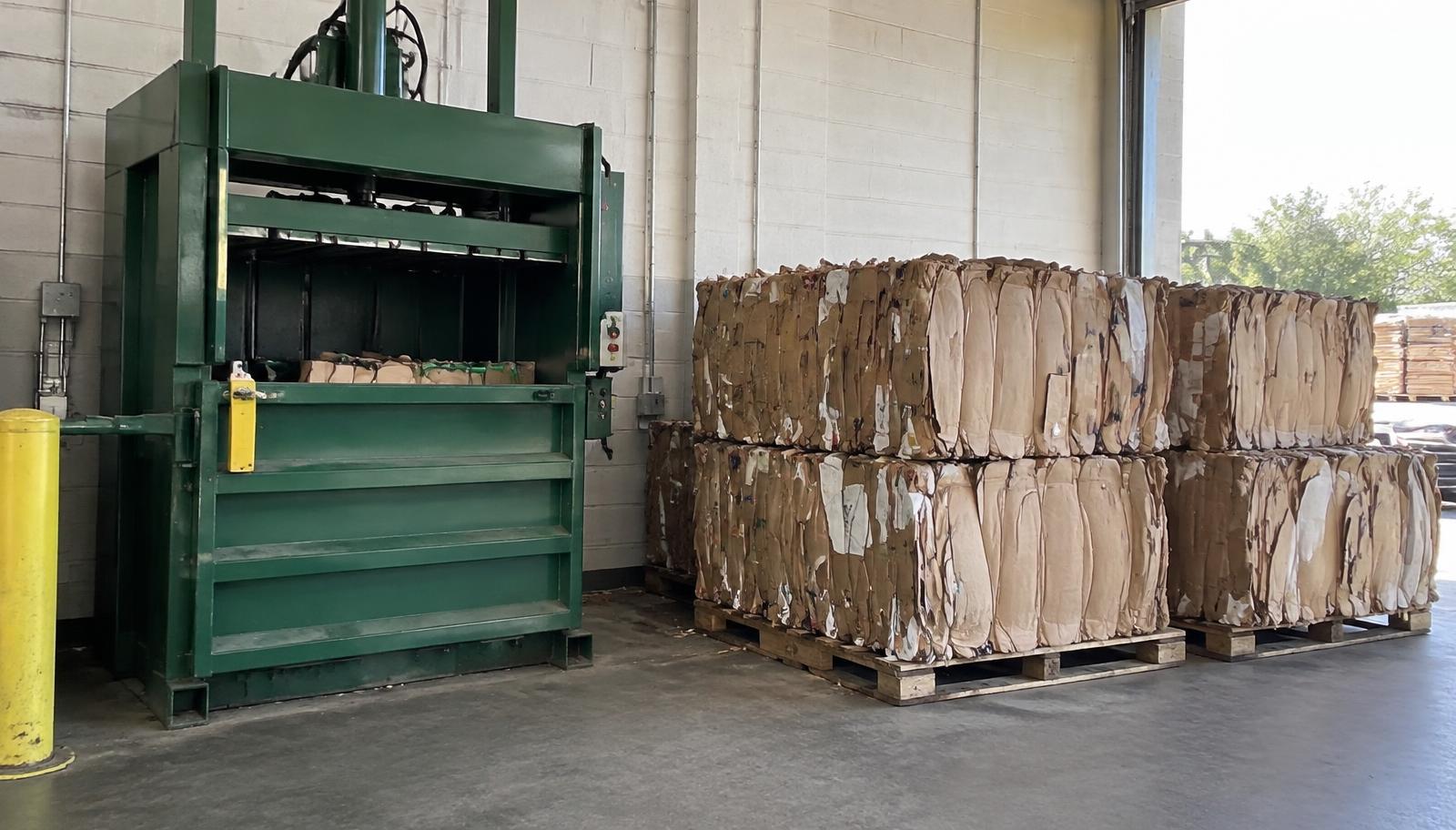
What does a baler do?
A baler uses a hydraulic ram to press loose material into a chamber. Once the chamber is full, the compressed material is tied with wire or strapping and removed as a single bale.
Loose cardboard boxes and plastic film take up a lot of space for their weight. Compressing them into bales reduces the space needed to store them on site and makes them easier to stack, move and transport.
Types of baler
Vertical balers
A vertical baler loads from the front and compresses material downwards. It has a relatively small footprint, so vertical balers are common in shops, back-of-house areas and smaller warehouses. Material is usually loaded by hand.
Horizontal balers
Horizontal balers compress material sideways and are typically fed by conveyor or from a hopper. They are larger and are used on sites with high, continuous volumes, such as distribution centres and recycling facilities.
Balers and compactors
A compactor also compresses waste, but usually into a container or skip rather than into separate tied bales. Balers are generally used for single recyclable materials, while compactors are often used for general waste.
What materials can be baled?
Balers are most often used for:
- Cardboard: boxes and outer packaging, the most common baled material
- Plastic film: shrink wrap, pallet wrap and bags
- Paper: office paper and other paper waste
- Rigid plastics: some balers handle crates, bottles and other rigid items
Keeping each material in its own bale helps keep recyclable streams separate. Under the GOV.UK workplace recycling guidance, paper and card must be collected separately from plastic, metal and glass unless the collector has completed a written co-collection assessment.
How baled cardboard is collected
Through our cardboard recycling service, cardboard is collected baled or palletised. Collections usually start at 4 tonnes. Sites that produce less can store baled cardboard until they reach that amount.
Baled cardboard may also earn a rebate. The amount depends on the weight and quality of the bales.
How baled plastic is collected
Our plastic recycling service collects bulk plastics either baled or stacked on pallets. Baling is not required, but it usually lowers collection costs. Plastic film can be baled or palletised, and large rigid items such as pipe can be collected unbaled.
Getting a cardboard baler for your site
We supply cardboard balers and compactors for hire and sale to businesses that produce cardboard in volume. Before recommending a machine, our team needs to know:
- the materials you produce, such as cardboard, plastic film or paper
- approximate weekly or monthly volumes
- the space available and access for collection vehicles
- whether you are looking to hire or buy
Balers and workplace health and safety
Balers are work equipment. The Health and Safety Executive (HSE) explains that the Provision and Use of Work Equipment Regulations 1998 (PUWER) cover the inspection, maintenance, training and competence of people using work equipment. HSE also publishes guidance for the waste and recycling industry.
The baler manufacturer or supplier provides operating instructions for each machine. This article does not give operating or safety instructions.
Paperwork for baled waste
Baled waste is still business waste. GOV.UK states that a business must complete a waste transfer note for each load of waste leaving its premises and keep a copy for 2 years. Waste transfer paperwork is included with our business collections.
Rules in Scotland, Wales and Northern Ireland
This article describes the position in England. Workplace recycling rules differ elsewhere in the UK, regulated by SEPA, Natural Resources Wales and the Northern Ireland Environment Agency.
Frequently asked questions
What is a baler used for?
A baler compresses loose recyclable waste, such as cardboard or plastic film, into dense bales that take up less space and are easier to store and transport.
What is the difference between a vertical and a horizontal baler?
Vertical balers compress downwards and have a small footprint. Horizontal balers compress sideways, are usually fed by conveyor or hopper, and suit high-volume sites.
How much cardboard is needed for a baled collection?
Our cardboard collections usually start at 4 tonnes, baled or palletised.
Can you hire a baler?
Yes. We supply cardboard balers and compactors for hire and sale.
Sources
- GOV.UK: Workplace recycling in England
- HSE: Provision and Use of Work Equipment Regulations (PUWER)
- HSE: Waste and recycling
- GOV.UK: Waste transfer notes
Speak to our team
To discuss your waste, contact our team on 0845 366 9306 or email recycle@collectandrecycle.com.
This article is for general information only and does not constitute professional or legal advice. Waste producers are legally responsible for correctly classifying their waste. For guidance on your specific waste, please contact our team.