
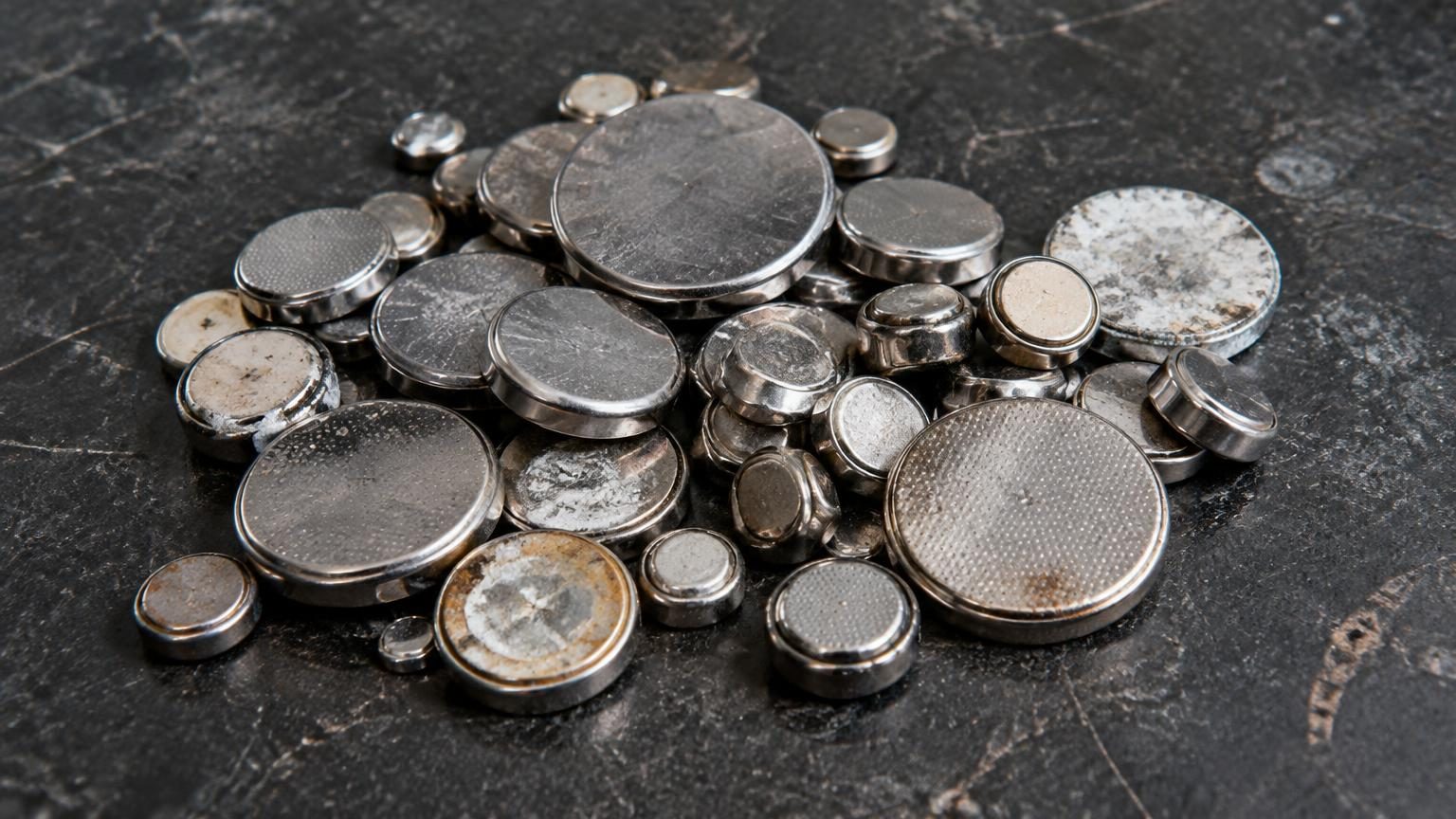
Button Cell Battery Recycling for Businesses
National Recycling provides button cell battery recycling for UK businesses, collecting used silver oxide, lithium coin and zinc air batteries from your site.
Button cell battery collections
Button Batteries We Collect
We collect silver oxide, lithium coin, zinc air and alkaline button batteries safely and compliantly. These are often used in portable devices such as watches, calculators, thermometers and other small WEEE.
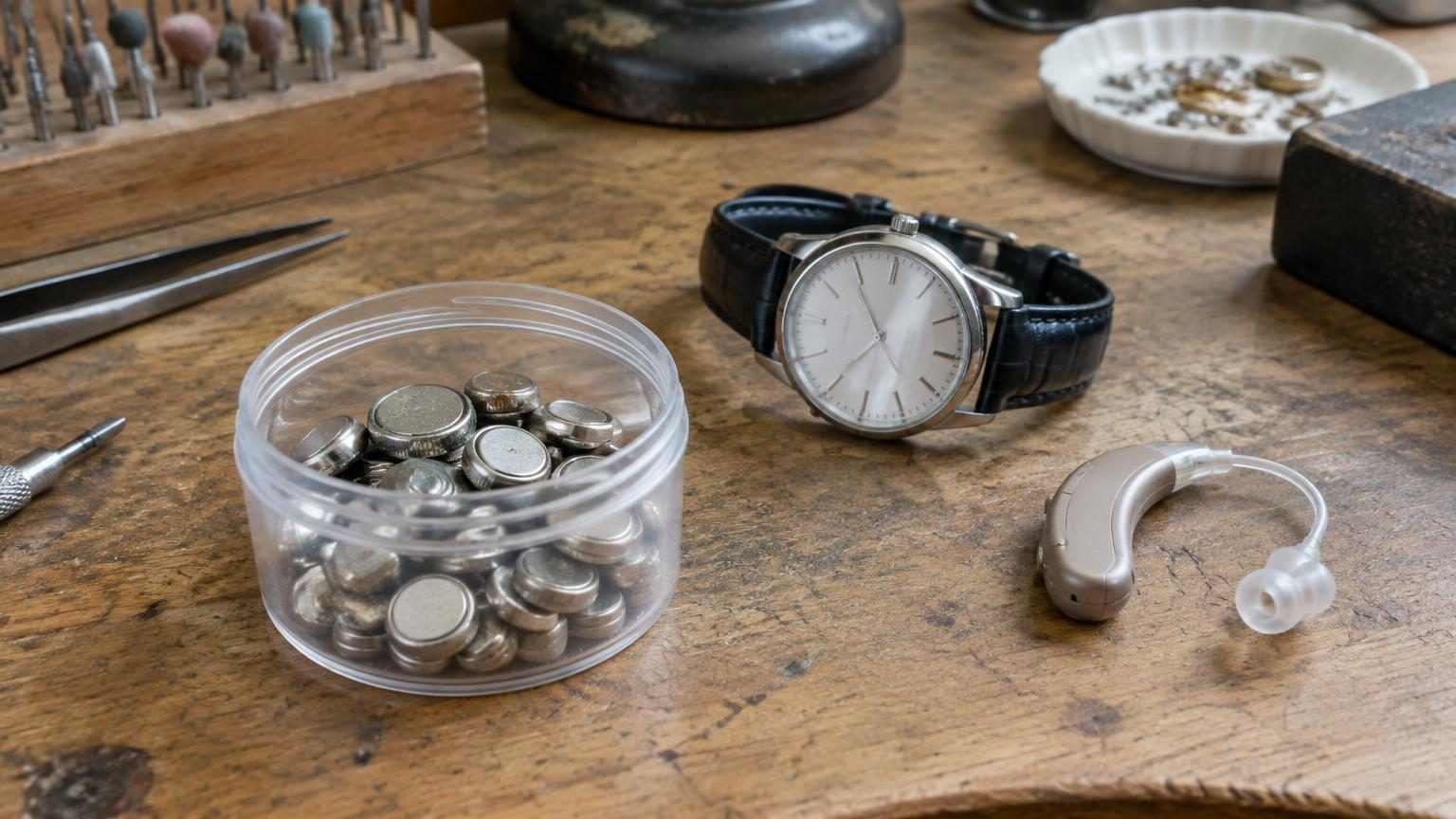
Handled with care.
Silver oxide batteries.
Watch and small-device cells, which contain silver that can be recovered.Lithium coin cells.
Flat lithium cells, such as the CR2032, from key fobs, calculators and electronics.Zinc air batteries.
Hearing aid batteries.Alkaline button cells.
Small alkaline cells from toys, calculators and gadgets.
From your site to a fresh start
How Button Battery Disposal Works
- 01
Tell us what you have.
Use the quote form to give us the battery type, rough quantity and collection postcode. - 02
Get your quote.
Our team replies with a quote providing clear pricing details. - 03
Store safely.
Keep used button cells in a closed, labelled container out of reach of children. We can supply UN-approved battery bins. - 04
We collect.
A verified waste carrier from our haulage network collects on an agreed date. - 05
Receive your documents.
Batteries go to a licensed recycling facility, where they are sorted and metals are recovered. You receive the waste transfer note for your records.
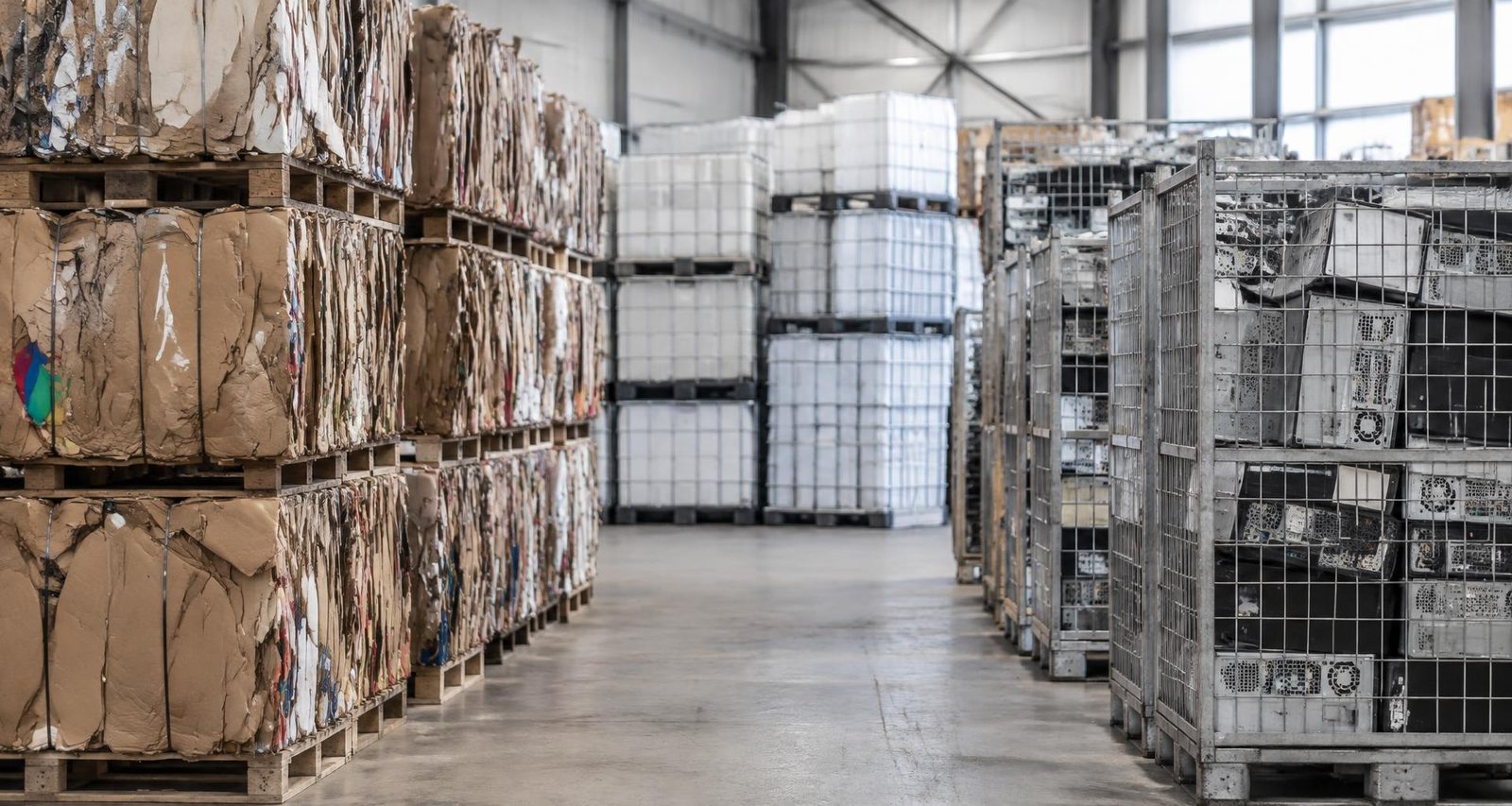
Let’s get it sorted
Arrange Button Cell Battery Recycling
Tell us what you need collected and our team will reply with a quote. Call 0845 366 9306 or request a quote online.
Professional services
Silver Oxide Battery Recycling
Silver oxide batteries are common in watches and precision devices. The silver inside them is worth recovering, so recycling them through a licensed recycling facility keeps a valuable material in use. If you replace watch batteries or service small devices, a dedicated container for used silver oxide cells makes collection simple.
Professional services
Why Safe Storage of Button Cells Matters
Button batteries are small enough for young children to swallow, and a swallowed button battery, especially a lithium coin cell, can cause serious internal injuries very quickly. If your premises are open to the public, such as a shop, pharmacy or clinic, keep used button cells in a closed container out of sight and reach.
Lithium coin cells can also short-circuit if they touch each other or metal objects. Tape over each cell or keep them in separate bags.
Your business has a duty of care under section 34 of the Environmental Protection Act 1990: use authorised carriers and keep waste transfer notes for 2 years. The Waste Batteries and Accumulators Regulations 2009 also set rules for how waste batteries are collected and recycled.
A partner you can depend on
Why Choose National Recycling
UK-wide coverage.
Our network of haulage partners collects from businesses across the country, including multi-site retailers.Fully compliant.
We use verified waste carriers and licensed recycling facilities, in line with UK regulations.Recycling first.
We recycle wherever it is possible and safe.Battery bins supplied.
UN-approved containers in a range of sizes.Quick quotes.
Our team replies quickly to every enquiry, providing a fast turnaround for collections.One-off or regular.
Book a single clearance or a scheduled collection, with one supplier for every location.
Find the right service
Related Battery Services
Can button cell batteries be recycled?
Yes. Button cell batteries can be recycled at a licensed recycling facility, where silver, zinc, lithium and other metals are recovered. Businesses should store them in a closed container and arrange collection through a licensed waste carrier. National Recycling collects button batteries from businesses across the UK.
How do you dispose of button batteries safely?
Tape over each used button battery or bag it separately, then store it in a closed container out of reach of children. Never put button batteries in general waste. When you have a quantity ready, arrange collection through a licensed battery recycling service and keep the waste transfer note.
Can silver oxide batteries be recycled?
Yes. Silver oxide batteries can be recycled, and the silver they contain can be recovered. Watch repairers, jewellers and electronics businesses often collect them in a dedicated container. We can arrange collection and recycling at a licensed recycling facility, with the paperwork your business needs.
Why are button batteries dangerous to children?
Button batteries are small enough to swallow, and a swallowed battery can burn through internal tissue in a short time. Lithium coin cells carry the highest risk. Businesses open to the public should store used button cells securely, out of sight and reach of children.
Can lithium coin cells go with other button batteries?
Yes, as long as each cell is taped or bagged to stop terminals touching. Lithium coin cells can short-circuit and overheat, so loose cells should not be mixed together. Tell us which types you have when you request a quote and we will advise on packing.
Will we get paperwork for our button battery collection?
Yes. You receive a waste transfer note for each collection, which shows your business passed its waste to an authorised carrier and met its duty of care. Keep waste transfer notes for at least 2 years, so you can show them if a regulator or client asks.