
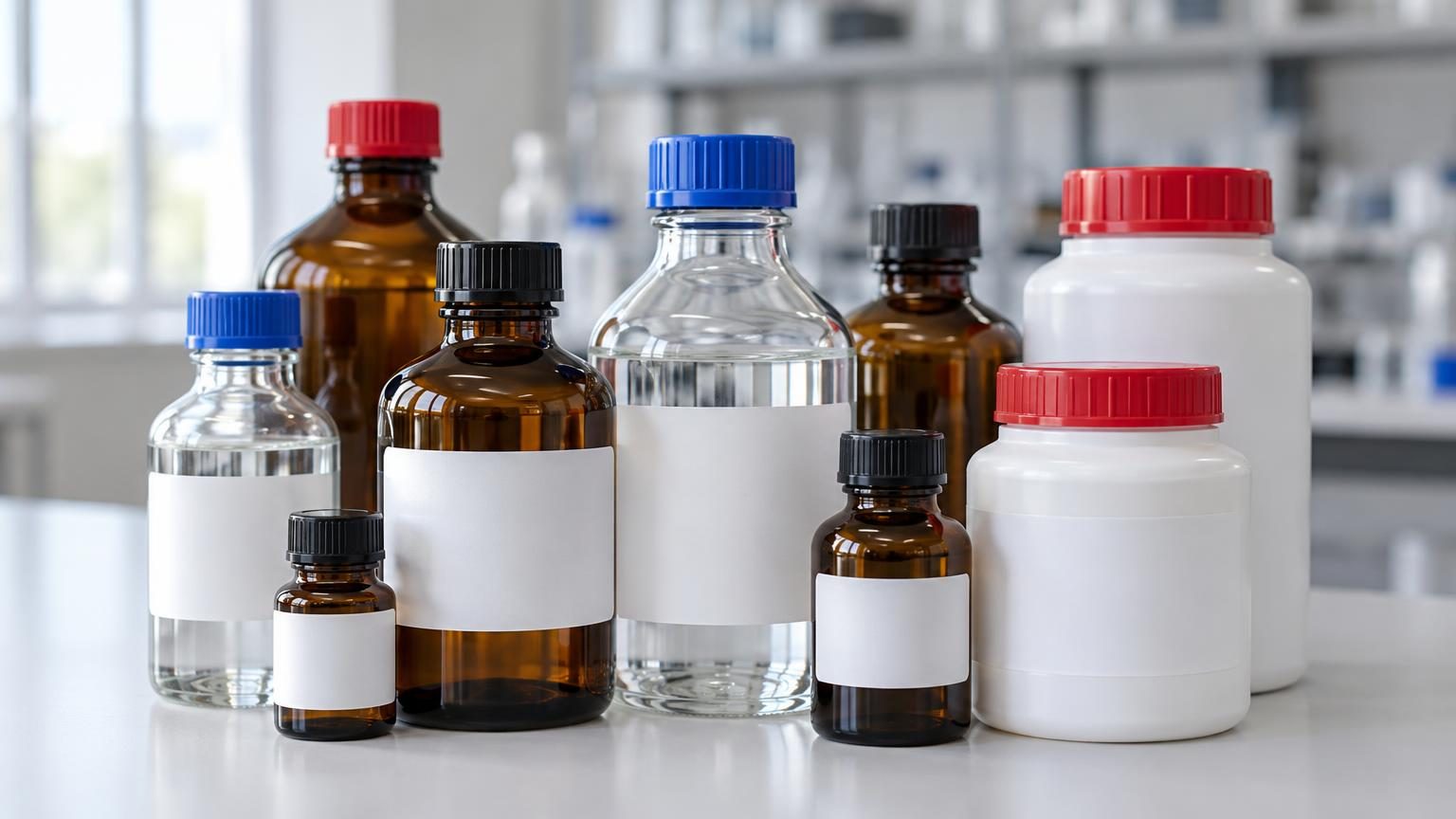
Laboratory Waste Disposal for Labs, Schools and Universities
National Recycling provides laboratory waste disposal for schools, colleges, universities and businesses across the UK, collecting lab chemicals, reagents and contaminated containers.
Laboratory waste collections
Lab Waste Disposal: What We Collect
Research, testing and teaching labs build up a wide mix of chemical waste. We collect it from industrial and quality control labs, research facilities, schools, colleges and universities.
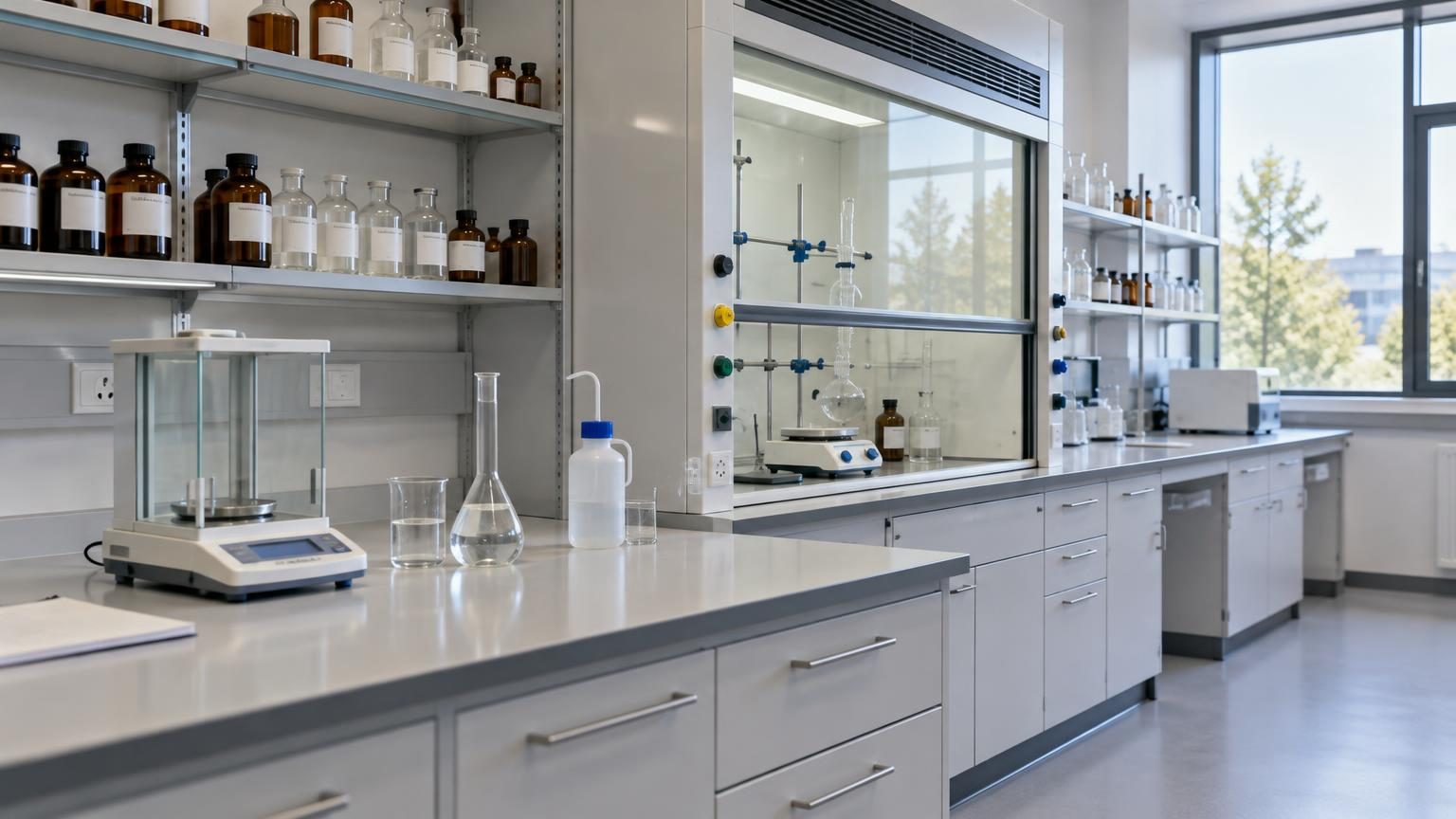
Compliant services.
Laboratory chemicals.
Surplus, out-of-date or unwanted chemicals from teaching, research and testing work.Reagents.
Used and expired reagents, collected in sealed and labelled containers.Lab solvents.
Including acetone, ethanol and isopropanol. See our solvent waste disposal page for larger volumes.Contaminated containers.
Bottles, drums and packaging that held hazardous substances.
From your site to a fresh start
How Laboratory Chemical Disposal Works
- 01
Get in touch.
Send us a list of the chemicals, rough quantities, container sizes and your collection postcode. A photo of the waste helps us quote accurately. - 02
Get your quote.
Our team replies with a quote providing clear pricing details. - 03
We collect.
A verified waste carrier from our national haulage network collects from your site on an agreed date, as a one-off or on a regular schedule. - 04
Recycling or safe disposal.
Your waste goes to licensed recycling facilities where materials can be recovered safely, or to licensed disposal sites where they cannot. - 05
Receive your documents.
You get a hazardous waste consignment note for each collection. Keep it for three years in England and Wales.
Let’s get it sorted
Arrange Laboratory Waste Disposal
Send us your chemical list and our team will reply with a quote. Call 0845 366 9306 or request a quote online.
Peace of mind
Chemical Laboratory Waste Disposal Regulations
Most chemical laboratory waste is classed as hazardous because it can be toxic, corrosive, flammable or reactive. It must never be poured down the sink or put in general waste.
Hazardous waste is covered by the Hazardous Waste (England and Wales) Regulations 2005, the Special Waste Regulations in Scotland and the Hazardous Waste Regulations (Northern Ireland) 2005. Each movement of hazardous waste needs a consignment note, and in England and Wales you must keep consignment notes for three years.
Your business also has a duty of care under section 34 of the Environmental Protection Act 1990. You must store waste safely, pass it only to authorised carriers and keep a record of every transfer.
Storage matters too. Incompatible chemicals can react if they are mixed, so keep waste in sealed, labelled containers and separate it by hazard until it is collected.
A partner you can depend on
Why Choose National Recycling for Lab Waste
Used to education and research.
We work with businesses, schools and local authorities, from industrial labs to school science departments.UK-wide coverage.
Our network of haulage partners collects from businesses nationwide, with a head office in Northampton and a depot in Burscough, Lancashire.Fully compliant.
We use verified waste carriers, licensed recycling facilities and licensed disposal sites, in line with UK regulations.Recycling first.
We recover materials wherever it is possible and safe, and only dispose of what cannot be recycled.Fast quotes.
Our team replies quickly to every enquiry, providing a fast turnaround for collections.One-off or regular.
Book a single clearance or a scheduled collection, with one supplier for every location.
Find the right service
Related Services
How do you dispose of laboratory chemicals?
Laboratory chemicals should be collected by a licensed waste carrier and taken to a licensed disposal site or recycling facility, never poured down the sink or put in general waste. Keep them in sealed, labelled containers, separate incompatible substances, and make sure you receive a hazardous waste consignment note for each collection.
Is laboratory waste classed as hazardous waste?
Most chemical laboratory waste is classed as hazardous because it can be toxic, corrosive, flammable or reactive. That includes many reagents, solvents and the containers they came in. Hazardous waste must be collected by a licensed carrier and moved with a consignment note, which you keep for three years in England and Wales.
Do you collect lab waste from schools and universities?
Yes. We collect laboratory waste from schools, colleges and universities as well as businesses and local authorities. Science departments often build up old or unwanted chemicals over time, and we can arrange a one-off clear-out or regular collections to keep stock levels safe.
Can you collect small quantities of lab chemicals?
Yes. We arrange both one-off and regular collections, for small and large volumes. Tell us which chemicals you have, the quantities and the container sizes, and our team will reply with a quote and advice on storing the waste before collection.
What paperwork do I get for laboratory waste disposal?
You receive a hazardous waste consignment note for each collection of hazardous laboratory waste. It records what the waste is, who produced it, who carried it and where it went. In England and Wales you must keep consignment notes for three years to show you met your duty of care.
How should I store lab waste before collection?
Store laboratory waste in sealed, clearly labelled containers in a secure area, away from drains and heat. Keep incompatible chemicals apart, such as acids and alkalis, or oxidisers and flammable liquids. We can supply approved containers, including COSHH bins, so your waste is stored safely until it is collected.