
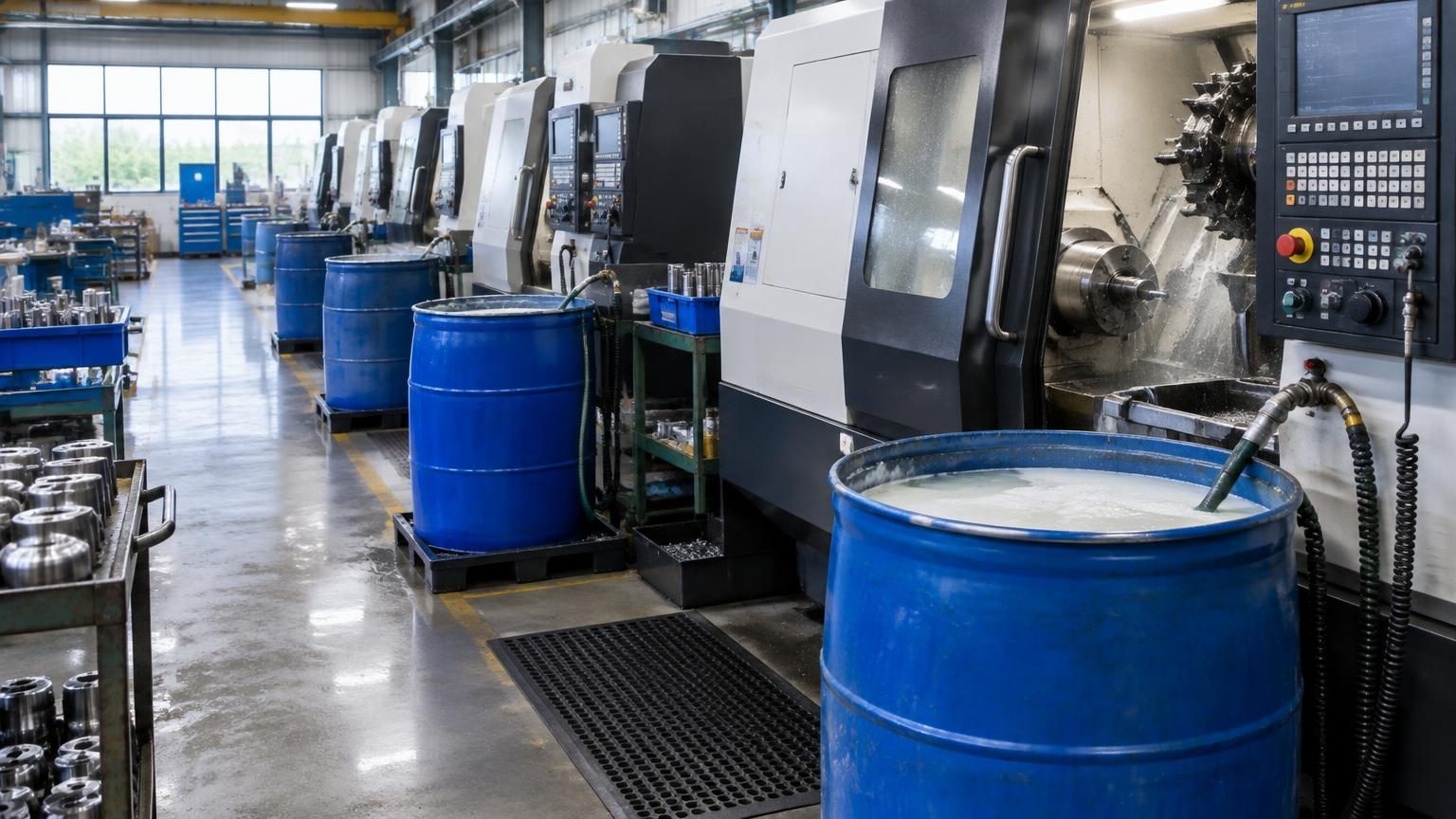
Coolant Disposal for Machine Shops and Industry
National Recycling provides coolant disposal for machine shops, engineering firms and manufacturers across the UK, collecting waste cutting fluids from sumps, drums and IBCs.
Coolant collections
Waste Coolant We Collect
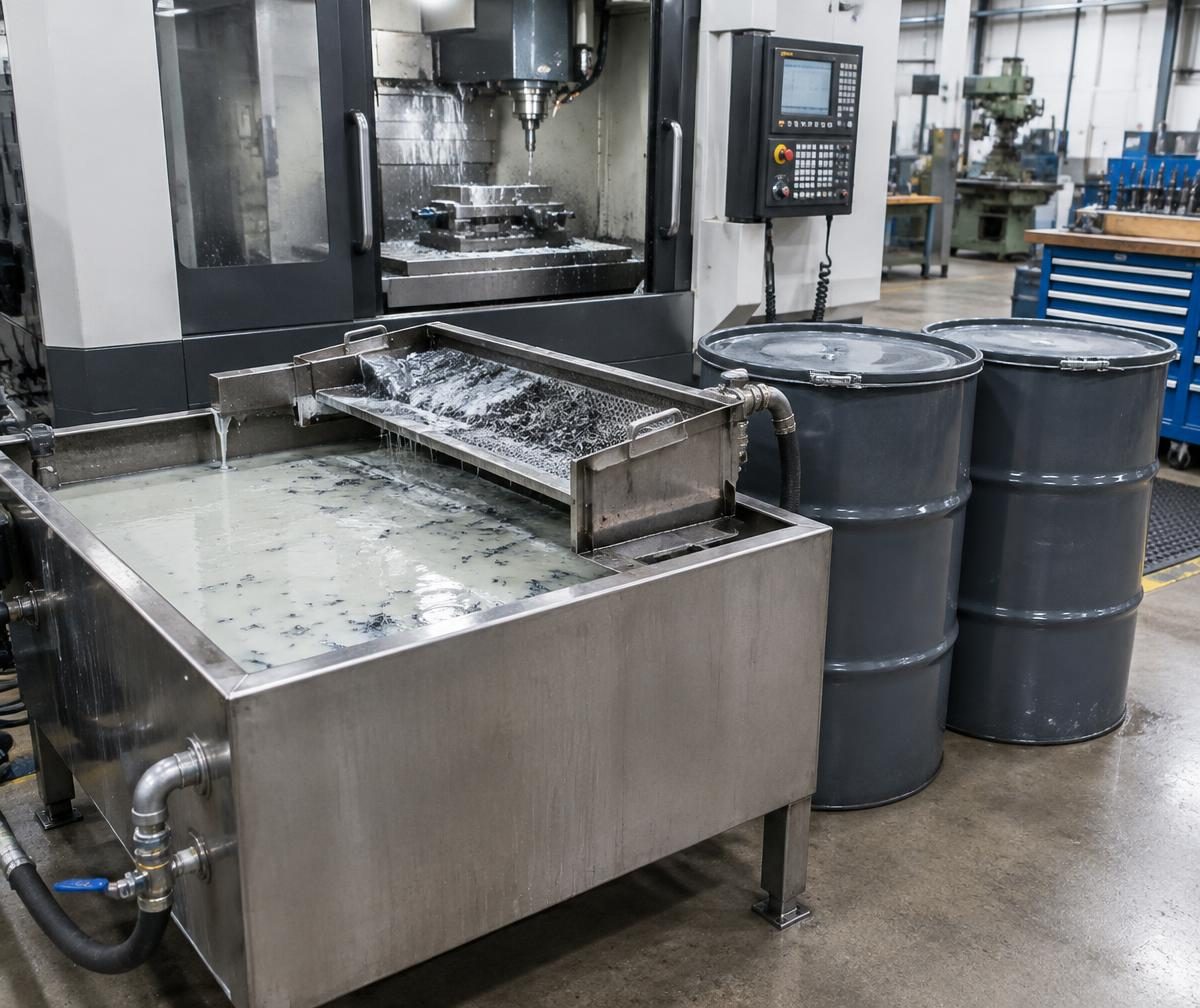
We collect waste cutting fluids from sumps, drums and IBCs and dispose of them safely and compliantly.
Machine shops produce metal swarf as well as coolant. We collect both, so you can deal with one supplier. See metal swarf recycling.
Handled with care.
Water-mix coolants.
Spent soluble oil emulsions, semi-synthetic and synthetic fluids.Neat cutting oils.
Straight cutting oils that are no longer fit for use.Sump and tank contents.
Coolant drained during machine cleans, changeovers and decommissioning.Grinding fluids.
Coolant from grinding and finishing machines.Engine coolant.
For vehicle coolant, see our antifreeze disposal page.
From your site to a fresh start
How Waste Coolant Disposal Works
- 01
Tell us what you have.
Use the quote form to tell us the type of coolant, rough volume, how it is stored and your collection postcode. A photo helps us quote accurately. - 02
Get your quote.
Our team replies with a quote providing clear pricing details. - 03
We collect.
A licensed carrier from our national haulage network collects on an agreed date, as a one-off or on a regular schedule. - 04
Recycle or dispose.
Your coolant goes to licensed recycling facilities or licensed disposal sites. We recycle wherever it is possible and safe. - 05
Receive your documents.
You get a digital hazardous waste consignment note for your records.
Let’s get it sorted
Get a Coolant Disposal Quote
Tell us what coolant you need collected and our team will reply with a quote. Call 0845 366 9306 or request a quote online.
Professional services
Why Machining Coolant Needs Specialist Disposal
Machining coolant is mostly water, but it contains oils and additives, and in use it picks up tramp oil, fine metal particles and bacteria. Spent machining emulsions and cutting oils are usually classed as hazardous waste.
In England and Wales the Hazardous Waste (England and Wales) Regulations 2005 apply, with the Special Waste Regulations in Scotland and the Hazardous Waste Regulations (Northern Ireland) 2005 in Northern Ireland. You must keep coolant separate from other waste, store it in suitable, labelled containers and use licensed disposal services.
Your duty of care under section 34 of the Environmental Protection Act 1990 means spent coolant must not go down a drain. Keep hazardous waste consignment notes for 3 years.
A partner you can depend on
Why Choose National Recycling for Coolant Disposal
UK-wide collections.
Our network of haulage partners collects from workshops and factories across the country, so multi-site manufacturers deal with one supplier.Fully compliant.
We use verified waste carriers and licensed recycling facilities, in line with UK regulations.Recycling first.
We recycle wherever it is possible and safe, and send the rest to licensed disposal sites.Swarf and coolant together.
We collect metal swarf as well, so engineering firms can use one supplier for both.Fast quotes.
Our team replies quickly to every enquiry, providing a fast turnaround for collections.One-off or regular.
Book a single clearance or a scheduled collection, with one supplier for every location.
Find the right service
Related Services
How do you dispose of waste coolant?
Store waste coolant in sealed, labelled containers, separate from other waste, and have it collected by a licensed waste carrier. It must not go down a drain. National Recycling collects machining coolants and cutting fluids from businesses across the UK and provides the consignment notes you need.
Is machining coolant hazardous waste?
Spent machining coolant is usually classed as hazardous waste. Even water-mix coolants contain oils and additives, and in use they pick up tramp oil, metal fines and bacteria. Assume it is hazardous unless you have confirmed otherwise, and use a licensed carrier for collection.
Can coolant go down the drain?
No. Machining coolant contains oils, additives and metal particles that can pollute watercourses. Pouring it down a drain breaches your duty of care for business waste. Keep spent coolant in a sealed container and book a collection with a licensed waste carrier instead.
How often should waste coolant be collected?
It depends on how much coolant your machines use and how often you change sumps. Some workshops book a collection after a machine clean or changeover, while others prefer regular collections. Tell us your volumes and we can arrange one-off or regular collections to suit.
Can you collect metal swarf at the same time?
Yes. Machine shops usually produce both coolant and metal swarf, and we collect both. Tell us about each waste stream when you enquire, and we will quote for collecting them together. Our team replies to every enquiry.
Do you collect engine coolant?
Yes. Engine coolant from vehicles is usually called antifreeze. It is glycol-based and is a different waste from machining coolant, so store the two separately. See our antifreeze disposal page for more on collecting vehicle coolant from garages and fleets.